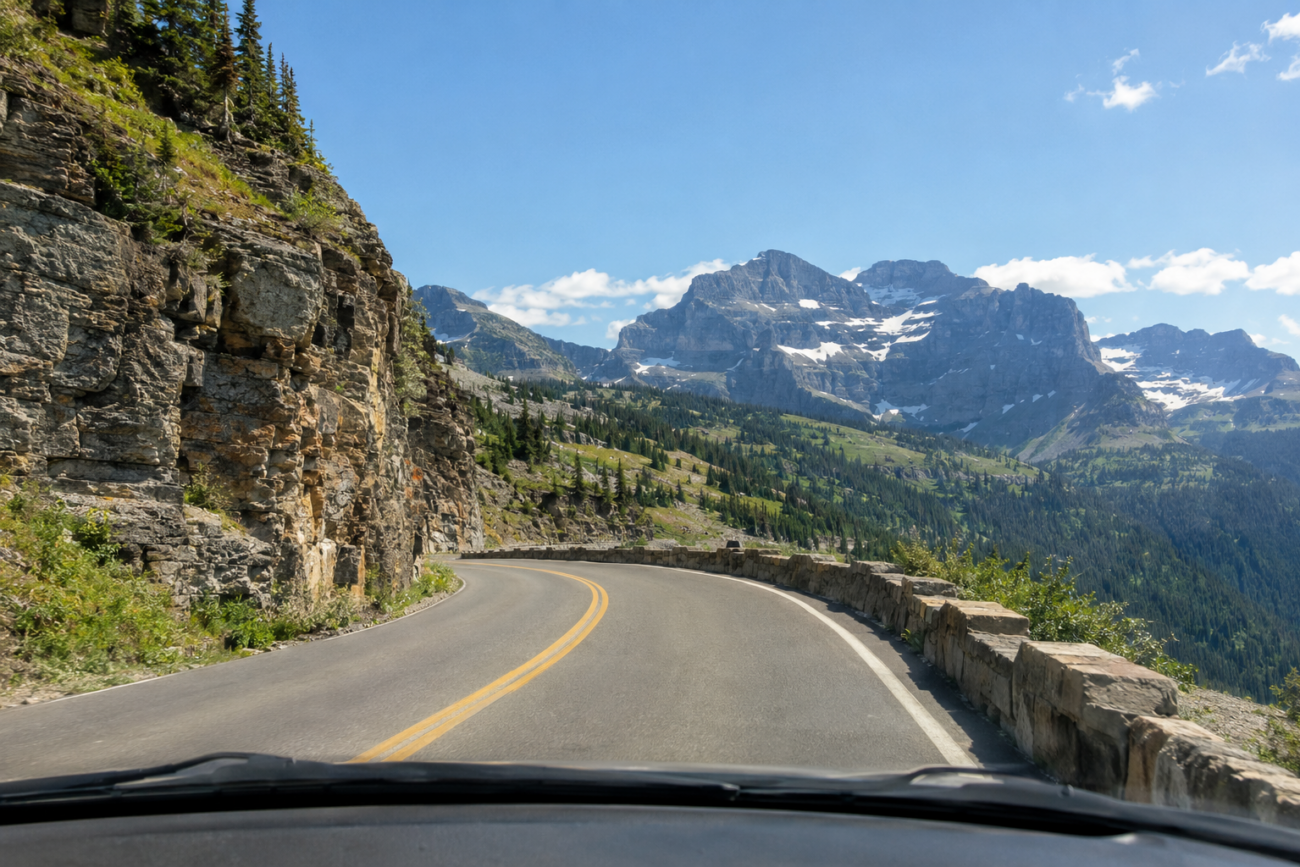
Glacier National Park in Montana draws over 3 million visitors annually to pristine backcountry, alpine peaks, and turquoise glacial lakes. While the park's dramatic landscape is genuinely safe for most visitors who follow basic precautions, understanding potential hazards—from grizzly bears to sudden weather shifts—makes the difference between an incredible adventure and a dangerous encounter. This comprehensive safety guide covers real hazards and practical strategies for exploring Montana's crown jewel with confidence.
1. Going-to-the-Sun Road Conditions and Mountain Driving Hazards
West Glacier to St. Mary, Montana
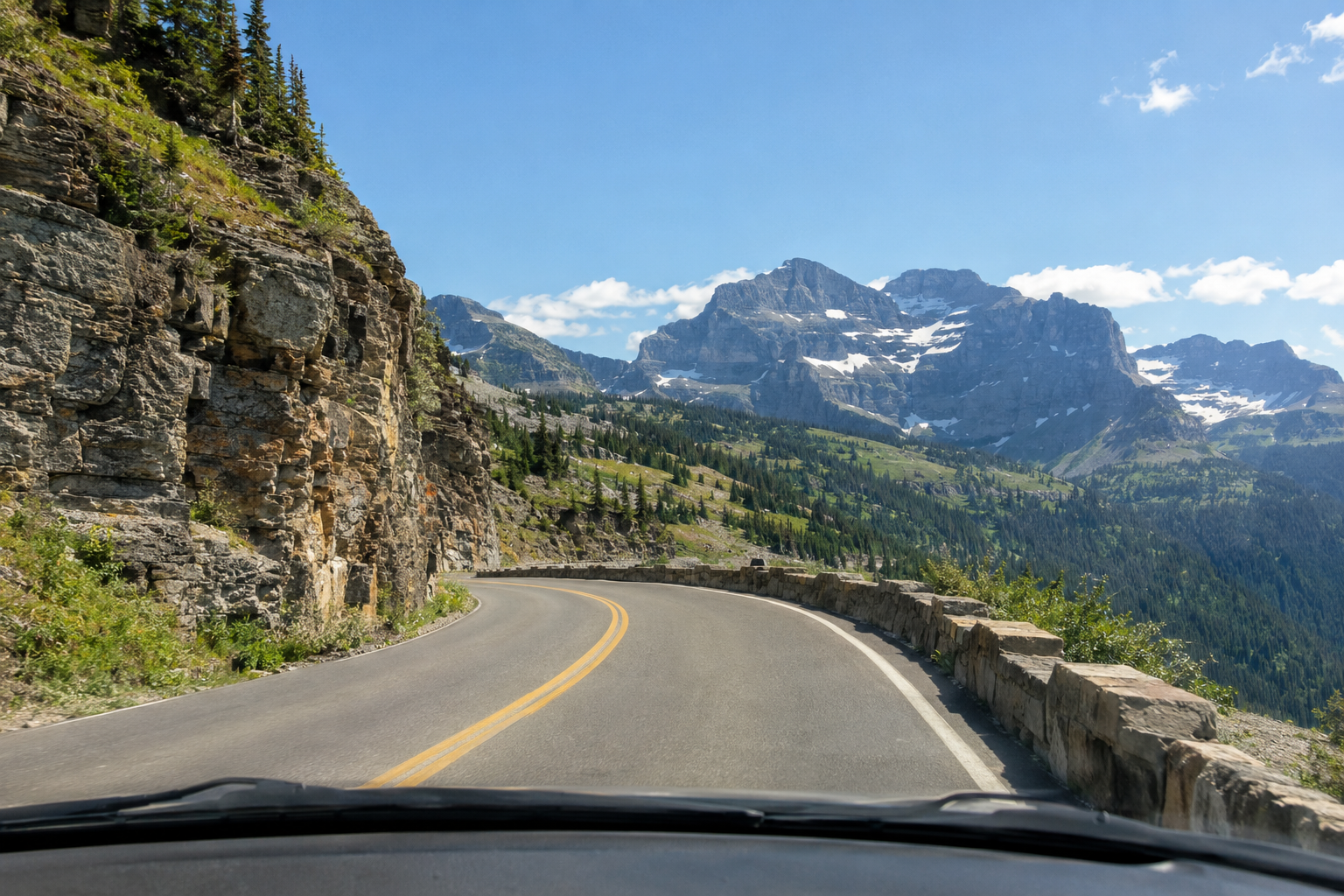
The 50-mile Going-to-the-Sun Road from West Glacier to St. Mary ranks among America's most stunning scenic drives but demands serious respect. Narrow switchbacks, no guardrails on many sections, and sudden weather changes create genuine hazards, especially for drivers unfamiliar with mountain road conditions. The road typically opens in June and closes by mid-October due to heavy snow accumulation. Drivers navigating this corridor must understand that altitude, exposed curves, and weather volatility make this one of Montana's most challenging highways.
Fun fact: Going-to-the-Sun Road was built between 1921 and 1932 without modern equipment, and its original stone guardrails were intentionally low to preserve views—a design choice that would never pass today's safety standards.
Tip: Drive during daylight hours only, reduce speed on curves, and check road status before visiting (nps.gov/glac has real-time closures). Avoid driving this road in rain or after sunset. The park strongly discourages RVs and large vehicles on this narrow corridor. Check weather forecasts at Apgar Village or St. Mary visitor centers before departing.
2. Grizzly Bear Encounters and Bear Country Protocol
Backcountry throughout Glacier National Park, Montana
Glacier National Park sits in the Northern Continental Divide Ecosystem, home to roughly 1,000 grizzly bears. While fatal attacks remain extremely rare (fewer than one per million visitor days), bears are active throughout the park's backcountry, especially in berry season from August through September. Most bear encounters result from surprise and food-related factors rather than aggressive behavior. Understanding bear behavior and carrying proper safety equipment transforms backcountry travel from risky to manageable for most hikers visiting Montana's remote wilderness areas.
Fun fact: Grizzly bears in Glacier have expanded their range significantly since the 1970s; they're now frequently spotted near developed areas that were historically bear-free, a sign of successful ecosystem recovery.
Tip: Carry bear spray (EPA-approved) on all backcountry hikes and know how to use it before entering the wilderness. Make noise on trails, hike in groups of three or more, and never approach or photograph bears. Store all food in bear-proof containers at campsites. Register your backcountry itinerary at visitor centers and discuss bear activity reports with rangers.
3. Glacial Lakes and Hypothermia Risk
Lake McDonald, Bowman Lake, Pend Oreille Lake, Montana
Glacier's stunning alpine and subalpine lakes rarely exceed 50 degrees Fahrenheit even in summer, and water temperature drops dramatically with depth. Hypothermia can develop in minutes, especially for swimmers caught off-guard or unprepared. Most lake swimming-related incidents occur among visitors underestimating water cold rather than those attempting extreme activities. Lake McDonald near Apgar Village, Bowman Lake in the North Fork area, and Pend Oreille Lake all present similar cold-water risks that demand respect and preparation.
Fun fact: The glaciers that gave the park its name have melted substantially since its 1910 founding; the park had roughly 150 named glaciers then but fewer than 25 remain, and most continue shrinking annually.
Tip: If you swim, wear a wetsuit and life jacket, even if you're an experienced swimmer. Know the difference between swimming-designated beaches and hazardous shorelines. Never jump from rocks or test sudden drop-offs. Check water temperature postings at visitor centers in West Glacier and St. Mary. Always swim with a buddy and avoid swimming after sunset or in foggy conditions.
4. High-Altitude Hiking and Weather Volatility
Gunsight Pass, Heaven's Peak, Siyeh Pass, Montana
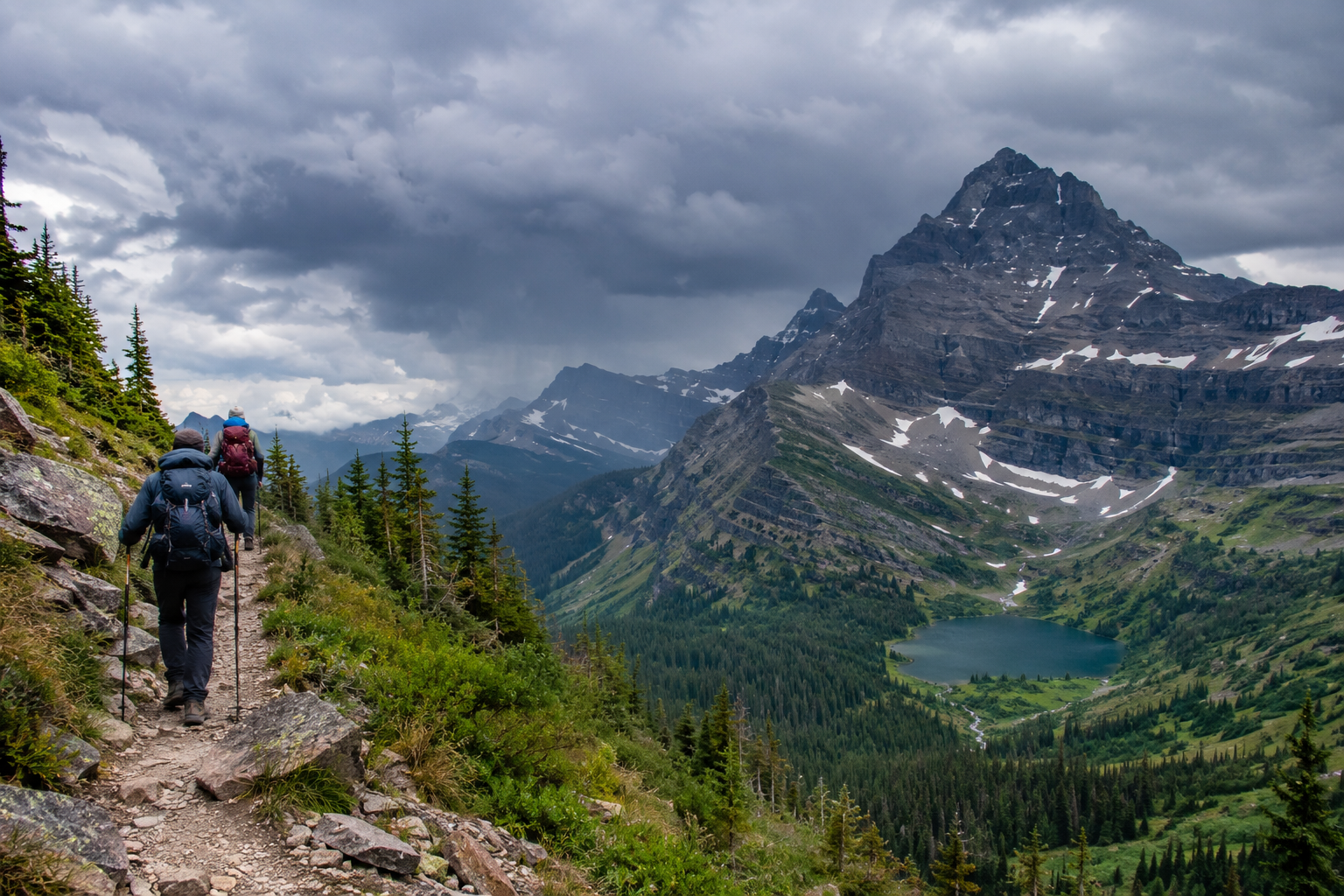
Glacier's high-country trails climb above treeline to spectacular views, but alpine weather changes with almost no warning. Afternoon thunderstorms develop rapidly, temperatures can drop 20 degrees in an hour, and lightning poses a serious hazard above 9,000 feet. Many injured hikers report being caught unprepared by weather they didn't anticipate when starting their hike in Montana's Northern Rockies. Trails like Gunsight Pass, Heaven's Peak, and Siyeh Pass showcase this volatility, requiring hikers to understand that weather forecasts at trailheads don't capture minute-by-minute changes in alpine zones.
Fun fact: Mount Jackson, one of Glacier's prominent peaks at 10,052 feet, receives snow every month of the year, even during summer, making sudden weather shifts a constant reality.
Tip: Start hikes early (before 8 a.m.), turn around by early afternoon if storms develop, and carry rain gear and extra layers even on sunny mornings. Check weather forecasts and avalanche reports before departing. Never rely on your phone for navigation in mountains where signal is nonexistent. Bring a headlamp in case you're delayed past sunset.
5. Trail Congestion and Navigation Risk
Lake Louise Trail, Avalanche Lake Trail, Gunsight Lake Trail, Montana
Popular trails near the park's eastern and western entrances attract significant crowds during peak summer season (June through August), creating congestion that increases risk through trail erosion, slower emergency evacuation, and route-finding confusion. Trails like Lake Louise near the eastern access points, Avalanche Lake near Apgar, and Gunsight Lake see 80% of the park's foot traffic, stretching rescue resources. Seasonal overcrowding also escalates human-wildlife conflict as bears and mountain goats encounter more visitors in limited spaces.
Fun fact: Glacier's trail system covers roughly 700 miles, but the most visited trails receive 80% of all foot traffic, creating a classic pattern where many visitors experience only the most crowded sections.
Tip: Visit in shoulder seasons (May or September-October) for better trail conditions and far fewer people. Start hikes before 8 a.m. to beat crowds. Download offline maps (AllTrails, Gaia GPS) since cell service is unreliable throughout Montana's backcountry. Stay on marked trails—backcountry route-finding claims multiple lost-hiker incidents annually.
6. Backcountry Camping Permits and Wilderness Planning
Fifty Mountain Camp, Gunsight Lake Camp, Granite Park, Montana
Glacier requires permits for all backcountry camping, and sites fill quickly during peak season—but inadequate planning creates safety issues when unprepared visitors find sites full, attempt illegal camping, or navigate the wilderness without proper reservations. Backcountry sites like Fifty Mountain Camp, Gunsight Lake Camp, and Granite Park offer access to Montana's most remote alpine terrain, but a significant portion of park rescues involve backcountry campers who underestimated distances, weather exposure, or water availability.
Fun fact: Glacier's backcountry campsites are intentionally primitive (no developed water systems or toilets) to preserve wilderness character, which means visitors must be fully self-sufficient for 2-5 days in remote terrain.
Tip: Reserve permits at least 2-3 months in advance for summer travel (permits open mid-March for the season). Carry topographic maps, water purification tablets, and a wilderness first aid kit. File a detailed trip itinerary with someone outside the park who will alert rangers if you don't check in as planned. Confirm bear activity reports and water availability with rangers during permit pickup.
7. River Crossings and Swollen Snowmelt Currents
North Fork River, Saint Mary River, McDonald Creek, Montana
Park rivers, fed by continuous snowmelt from June through August, run swift and cold with currents that overpower most hikers attempting crossings. The North Fork River, which forms Glacier's western boundary with the Flathead National Forest, and the Saint Mary River carry glacial silt that indicates powerful water volume and hazardous flow rates. Several trails require ford crossings to reach backcountry campsites, and late-season hiking (July-August) means stronger currents than early-season attempts. Fatal incidents occasionally result from misjudged ford difficulty in Montana's backcountry.
Fun fact: The North Fork River carries glacial silt that gives it a distinctive milky appearance—a clear indicator of powerful water volume upstream and a warning sign that crossing attempts should be reconsidered.
Tip: Never attempt ford crossings above knee level. Check water depth and current speed before committing; use a hiking pole for balance. If unsure, turn back or wait for lower water (late September often brings calmer conditions). Never ford alone or in low-light conditions. Cross perpendicular to current, not parallel.
8. Tick-Borne Illness and Backcountry Health Hazards
Going-to-the-Sun Corridor, Lower Elevations, Montana
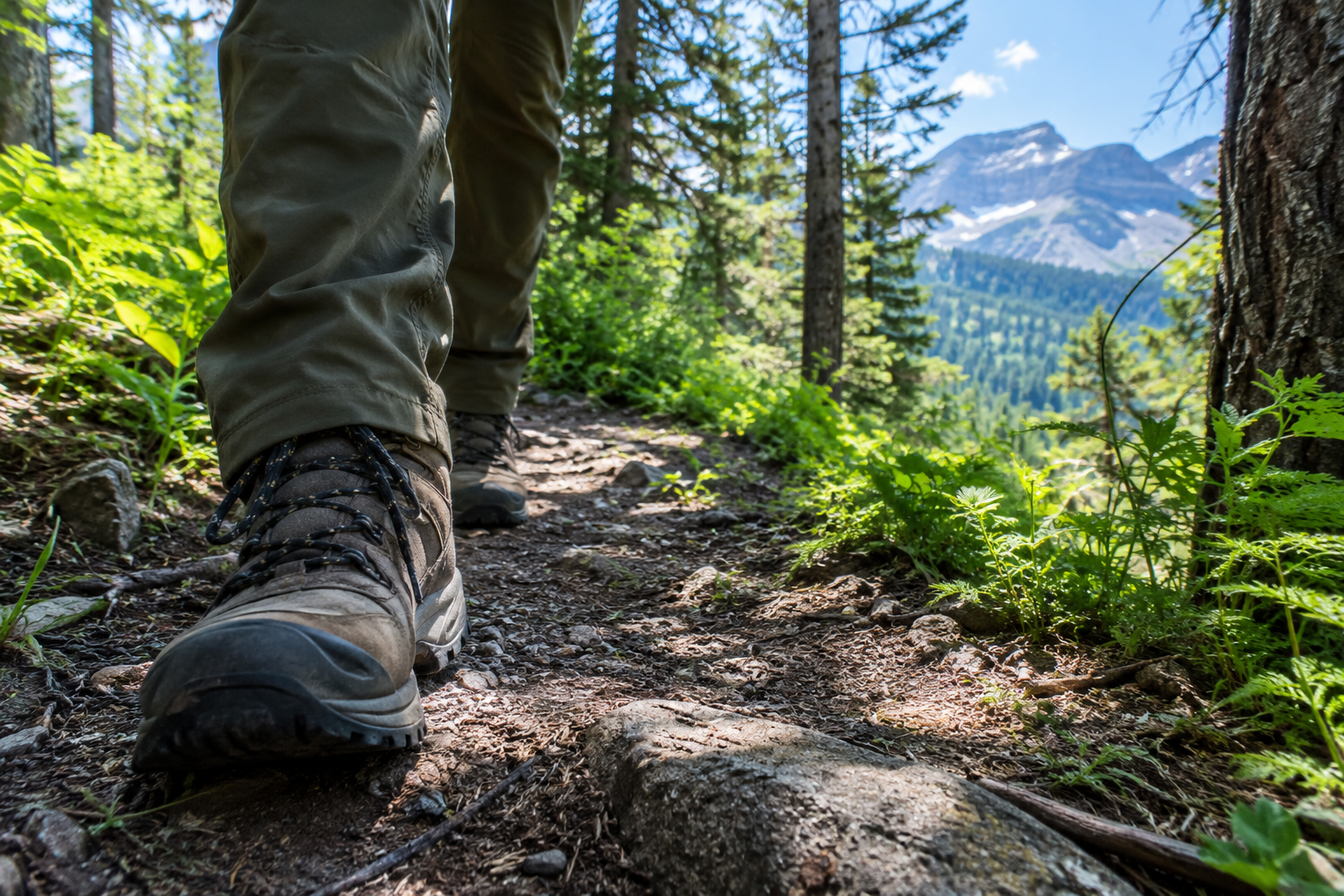
While Glacier sits in higher elevations where tick populations are lower than surrounding regions, ticks and mosquitoes still pose risks, particularly in lower-elevation forests and along waterways during late spring through early fall. Areas along the Going-to-the-Sun Corridor and lower-elevation trail systems near West Glacier and Lake McDonald present greater exposure. Lyme disease and other tick-borne illnesses have been documented in Montana, making prevention important for backcountry travelers spending nights outdoors.
Fun fact: Glacier's high elevation and short summer season limit tick populations compared to lower-altitude areas, but climate change has extended the active season and pushed ticks higher in elevation over the past two decades.
Tip: Apply DEET-based insect repellent before hiking; wear long sleeves and pants in lower-elevation forest areas. Perform full-body tick checks at day's end, especially behind ears and in hair. Carry tweezers for prompt removal if you find a tick. Remove ticks by grasping at the base and pulling straight out, then dispose properly. Check yourself again after returning to town.
Glacier National Park rewards prepared, respectful visitors with unforgettable experiences. Know the risks, follow park guidelines, and you'll safely discover why millions return to these mountains year after year.
Frequently asked questions
Is Glacier National Park safe for solo travelers?
Solo travel in Glacier is manageable if you follow park guidelines: stick to day hikes on well-marked trails, avoid backcountry camping, inform park staff of your plans, and carry communication devices (satellite communicator or GPS device with emergency function). Many solo hikers visit daily without incident, but never hike alone on remote trails or attempt cross-country navigation solo. Check in with rangers at West Glacier or St. Mary visitor centers before departing.
What months are safest for visiting Glacier National Park?
June through September offer the most developed infrastructure and clearest trails, but peak crowds create other challenges. May and early June bring lower crowds but potential snowpack on high trails; September offers ideal conditions with fewer visitors, stable weather, and open trails. October sees road closures beginning mid-month. Avoid winter travel unless you have mountaineering experience. Late September presents the best balance of accessibility and safety.
Do I need to carry bear spray in all areas of the park?
Bear spray is strongly recommended for all backcountry hiking but not required in developed areas near West Glacier or St. Mary. The park's official stance is that bear spray is an effective deterrent and provides better outcomes than firearms. For day hikes near roads and popular trails, many visitors don't carry it, but risk assessment increases in remote backcountry and during peak bear activity (August-September berry season). Rent or purchase bear spray at visitor centers.