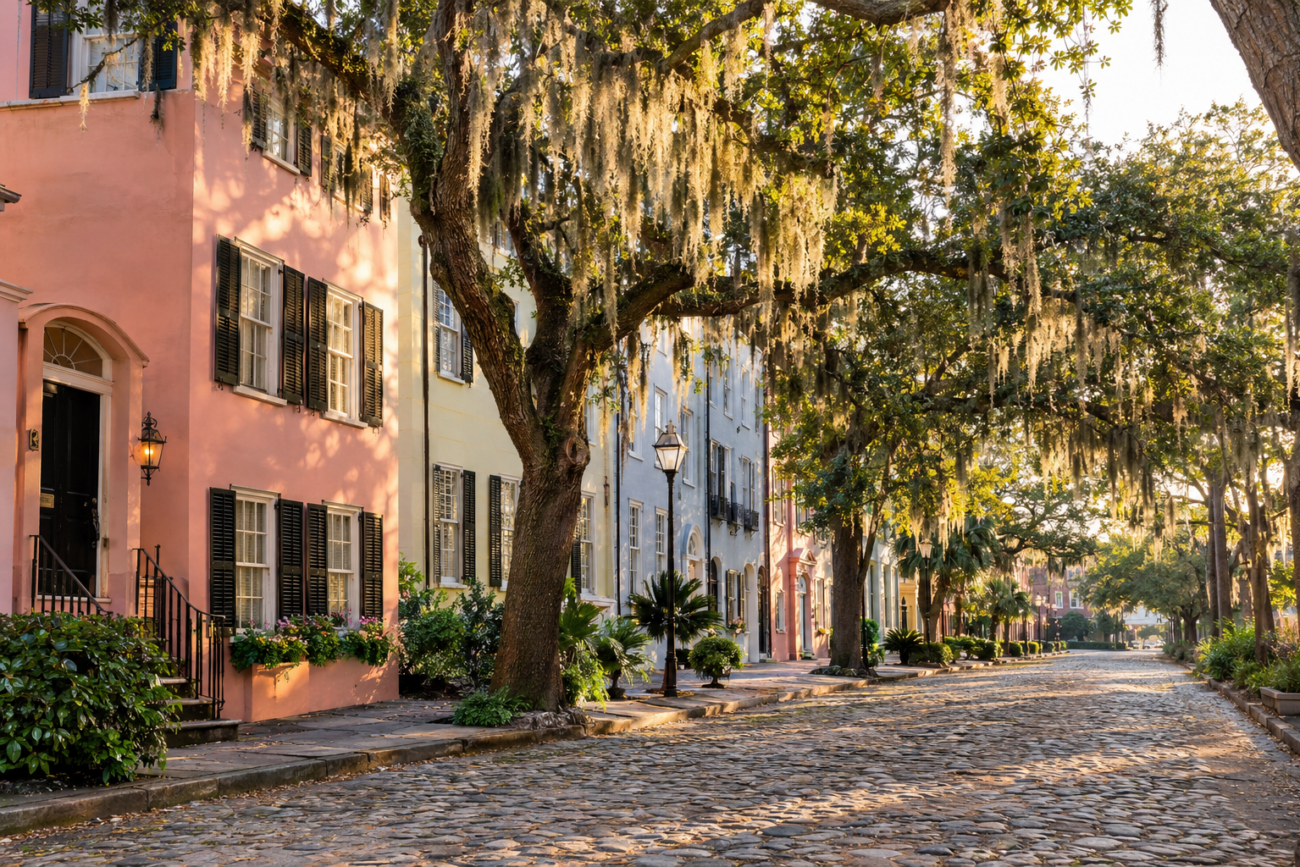
South Carolina offers an irresistible blend of historic charm, coastal beauty, and Low Country culture that makes it one of the Southeast's most rewarding destinations. Whether you're drawn to antebellum mansions in Charleston, pristine beaches along the Grand Strand, or hidden natural gems inland, South Carolina rewards curious travelers with authentic experiences and genuine Southern hospitality. This guide highlights 12 essential stops that capture the state's unique character and give first-time visitors a genuine feel for what makes South Carolina special.
1. Historic District, Charleston
Charleston, South Carolina
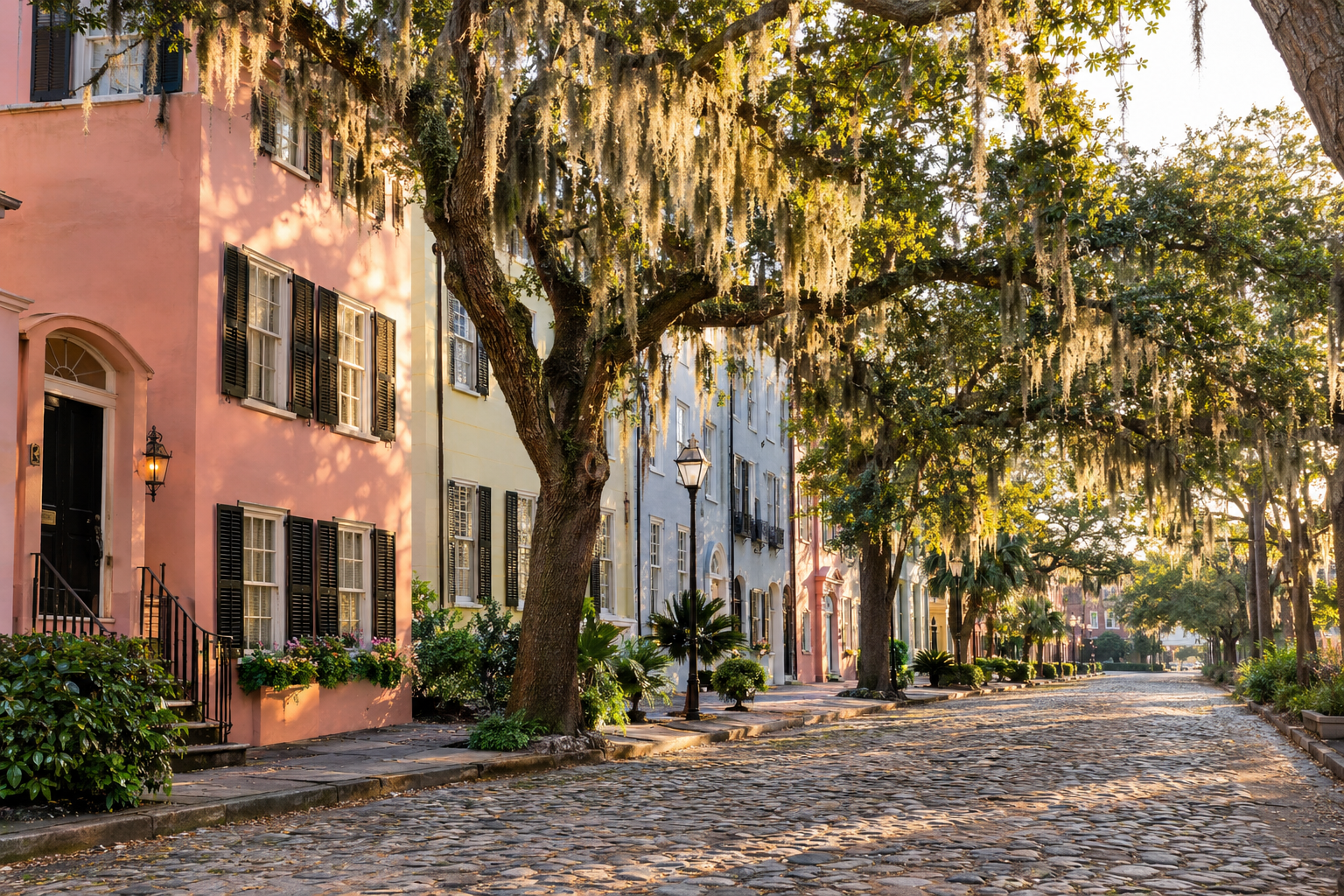
Charleston's walkable Historic District is lined with pastel row houses, gas-lit squares, and centuries-old architecture that transport you straight to the colonial era. Wander down King Street for shopping and dining, stroll through the Battery waterfront for harbor views, or explore hidden courtyards that reveal the city's layered past. The neighborhood seamlessly blends living history with modern restaurants, galleries, and boutiques throughout downtown Charleston.
Fun fact: Charleston's distinctive architecture includes "single houses" built at a 45-degree angle to maximize ventilation and shade in the pre-air-conditioning era, a practical design unique to the Low Country.
Tip: Visit on a weekday morning to avoid peak crowds; street parking is limited, so use paid lots on King or Meeting Street. Free walking tours depart from the Market Hall most days.
2. Folly Beach Pier
Folly Beach, South Carolina
This iconic fishing pier stretches 1,045 feet into the Atlantic and has been a beloved Lowcountry landmark since 1925, rebuilt after Hurricane Hugo. The wooden pier offers unobstructed ocean views, excellent fishing opportunities, and a carnival-like atmosphere with street performers and souvenir shops at Folly Beach. At the pier's end, you'll find a restaurant and bar where locals and visitors mingle.
Fun fact: Folly Beach Pier was featured in the opening credits of the TV series 'The Colbert Report' and is one of the most photographed piers on the East Coast.
Tip: Pier admission is $2 per person (free to fish or dine); fishing licenses are sold on-site. Visit at sunset for the best light and fewer crowds than mid-day.
3. Fort Sumter National Monument
Charleston, South Carolina
This offshore fort is where the Civil War began in April 1861, making it one of America's most historically significant sites. Accessible only by ferry from downtown Charleston, the fort combines museum exhibits, ranger talks, and sweeping harbor views from its ramparts. The multi-sensory experience includes a ferry ride past historic lighthouses and maritime landscapes in Charleston Harbor.
Fun fact: Fort Sumter was bombarded for 34 consecutive hours before Union forces surrendered, and remarkably, only one soldier was killed in the initial attack, though 3,000+ would die in the war that followed.
Tip: Buy ferry tickets in advance online ($18 adult round-trip); the ferry ride itself takes 20 minutes and is part of the experience. Bring sunscreen and water; limited facilities on the island.
4. Magnolia Plantation and Gardens
Charleston, South Carolina
America's oldest plantation open to the public features 60 acres of stunning gardens that blend native plants, cypress swamps, and horticultural artistry across seasonal cycles near Charleston. Beyond the gardens, the historic plantation house offers tours revealing the complex history of Low Country plantation life, while trails wind through pristine woodland and boardwalks cross dark-water swamps. The Audubon Swamp Garden is a separate 60-acre preserve within the grounds.
Fun fact: Magnolia's gardens have continuously evolved since 1694, making them among the oldest in the United States, yet the house itself burned in 1865 and was completely rebuilt.
Tip: Plan 3-4 hours minimum; admission includes gardens ($18), house tour ($8 extra), and swamp garden ($8). Visit March-April for peak azalea bloom; parking is included.
5. Myrtle Beach Boardwalk
Myrtle Beach, South Carolina
The Myrtle Beach Boardwalk stretches 1.4 miles along the Grand Strand with a contemporary design that opened in 2010, offering shops, restaurants, arcades, and direct beach access throughout the resort area. The promenade is lined with family attractions including a 187-foot observation wheel, mini golf, and the Myrtle Beach SkyWheel that provides views from 200 feet. The atmosphere is energetic and carnival-like, especially during summer and spring break.
Fun fact: Myrtle Beach became a resort destination only in the 1930s after the railroad arrived; before that, it was a quiet maritime forest.
Tip: Parking is available in several decks along the boardwalk ($5-$8/day); the boardwalk itself is free to walk. Weekday mornings are less crowded than evenings and weekends.
6. Congaree National Park
Hopkins, South Carolina
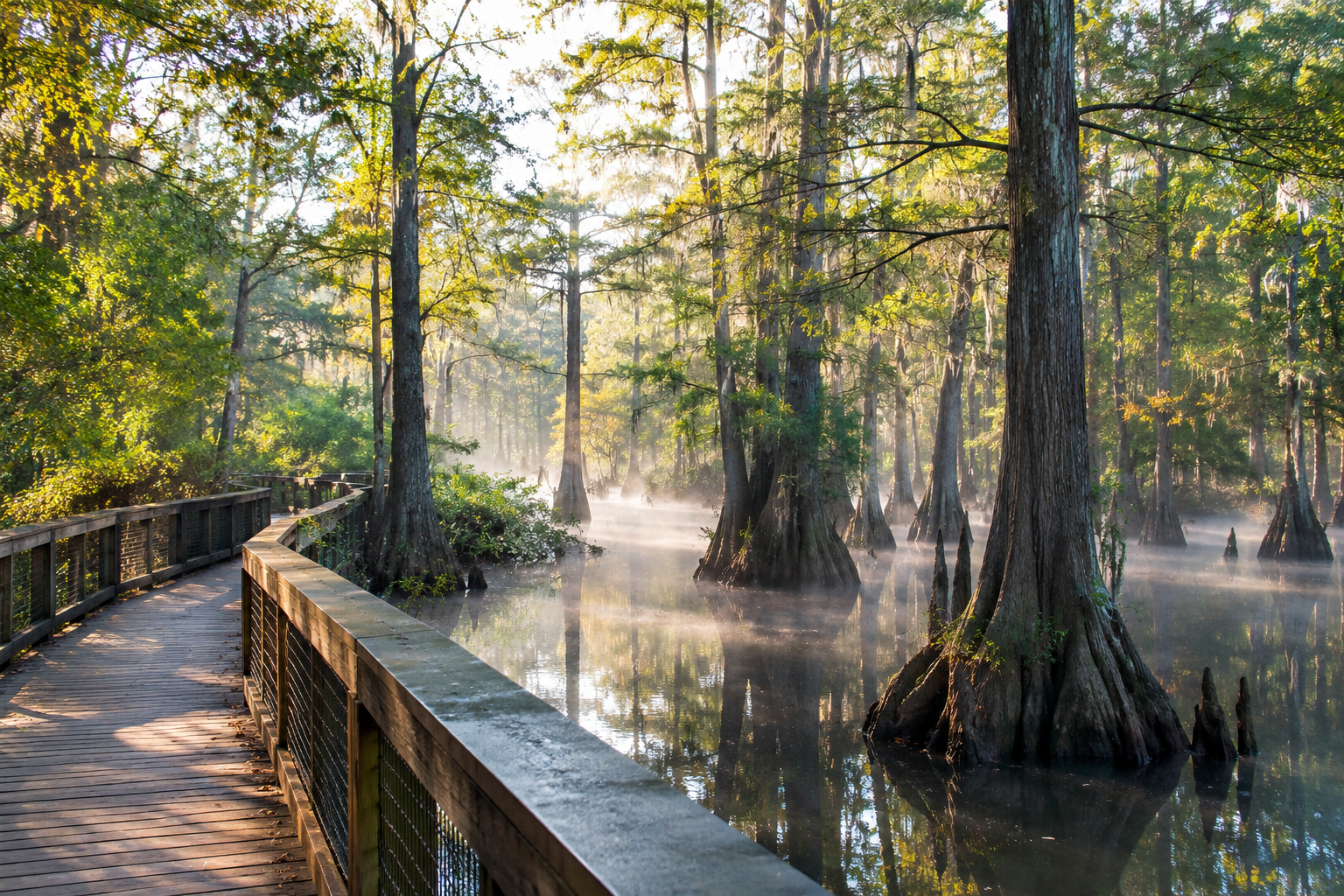
This protected wilderness near Columbia preserves 26,546 acres of old-growth bottomland hardwood forest and one of the largest intact old-growth forests in the Southeast. Visitors can paddle the scenic Congaree River by canoe, hike the 2.4-mile Boardwalk Trail through the heart of the forest near Hopkins, or fish for catfish and bream. The park is remarkably undeveloped and quiet, offering a genuine wilderness experience just 20 minutes from South Carolina's capital.
Fun fact: Congaree contains champion trees—the tallest and largest species in the Eastern U.S.—and the forest floor floods seasonally, creating a unique ecosystem that changes dramatically throughout the year.
Tip: There is no entrance fee; the Boardwalk Trail is wheelchair-accessible and perfect for a quick 45-minute visit if you're short on time. Bring bug spray and wear closed shoes due to muddy conditions.
7. Beaufort Historic District
Beaufort, South Carolina
This charming Low Country town 45 minutes from Savannah, Georgia, features antebellum homes, live oak-lined streets, and a quiet waterfront that feels frozen in time. The Beaufort Historic District is known as a gateway to Hunting Island State Park and Low Country maritime culture. Local shops, restaurants, and galleries create an intimate, walkable downtown throughout Beaufort's waterfront neighborhood.
Fun fact: Beaufort's landscape and architecture have been featured in 17 films and TV shows, including 'Forrest Gump,' 'Big Chill,' and 'The Big Chill,' making it one of the most-filmed small towns in America.
Tip: Park near the waterfront or downtown squares; most of the historic district is easily walkable. Visit the Beaufort History Museum ($2 admission) to understand the town's full story.
8. Hunting Island State Park
Hunting Island, South Carolina
This barrier island state park offers pristine beaches, maritime forest, salt marshes, and the iconic Hunting Island Lighthouse with a climb to panoramic views. The park includes 5,000 acres with camping, fishing, swimming, and nature trails near Beaufort, plus the historic lighthouse that dates to 1859. The combination of natural beauty and Civil War history makes it one of South Carolina's most scenic coastal destinations.
Fun fact: Hunting Island's lighthouse is 90 feet tall and can be climbed via 114 steps; it was moved 1.5 miles inland in 1898 due to erosion, one of only a few lighthouses in America ever relocated.
Tip: Admission is $5 per vehicle; the lighthouse climb is $2.50 extra. Visit early morning or late afternoon for the best light and smallest crowds on the beach.
9. Cape Romain National Wildlife Refuge
Awendaw, South Carolina
This vast 66,000-acre refuge protects saltwater marshes, barrier islands, and maritime forests that are critical habitat for migratory birds, loggerhead sea turtles, and Atlantic shorebirds near Awendaw and Charleston. Accessible by boat tour or private boat, the refuge offers outstanding wildlife viewing and photography opportunities, especially during spring and fall migrations. The contrast between pristine marshes and quiet beaches feels remarkably remote despite proximity to Charleston.
Fun fact: Cape Romain is home to 50,000+ colonial nesting birds and serves as a critical refueling stop for shorebirds traveling along the Atlantic Flyway during migration season.
Tip: Visit with an authorized boat tour operator from nearby landing; private boat access requires knowledge of shallow channels. Binoculars and a bird guidebook enhance the experience.
10. Pinnacle Mountain State Park
Roland, South Carolina
This inland gem in the upstate region features a scenic 1.5-mile loop trail to a 1,200-foot summit with 360-degree views of the surrounding Piedmont landscape and Blue Ridge foothills near Roland. The trail crosses creeks, passes through hardwood forest, and is accessible to families and casual hikers. The park offers a surprising elevation change and mountain scenery rarely expected in South Carolina's upstate.
Fun fact: Pinnacle Mountain's summit provides views into North Carolina and Georgia on clear days, and the mountain is composed of an igneous rock formation unique in South Carolina geology.
Tip: There is no entrance fee; the trail is well-maintained but can be muddy after rain. Visit fall for autumn foliage or spring for wildflowers and blooming mountain laurel.
11. Cypress Gardens
Moncks Corner, South Carolina
This blackwater swamp preserve features a scenic 1.5-mile boardwalk and cypress-lined waterway that feels like stepping into a primordial landscape near Moncks Corner. Kayak rentals allow visitors to paddle among towering cypress trees with Spanish moss, or explore by tram during tour season. The gardens opened in 1931 and have been restored into one of South Carolina's most photogenic natural attractions.
Fun fact: Cypress Gardens was founded as a pleasure garden and bird sanctuary during the Great Depression using labor from the Works Progress Administration (WPA), a New Deal program.
Tip: Admission is $15; kayak rentals are $20 extra and highly recommended. Visit dawn or early morning for the best light and wildlife activity, especially wading birds.
12. South Carolina Aquarium
Charleston, South Carolina
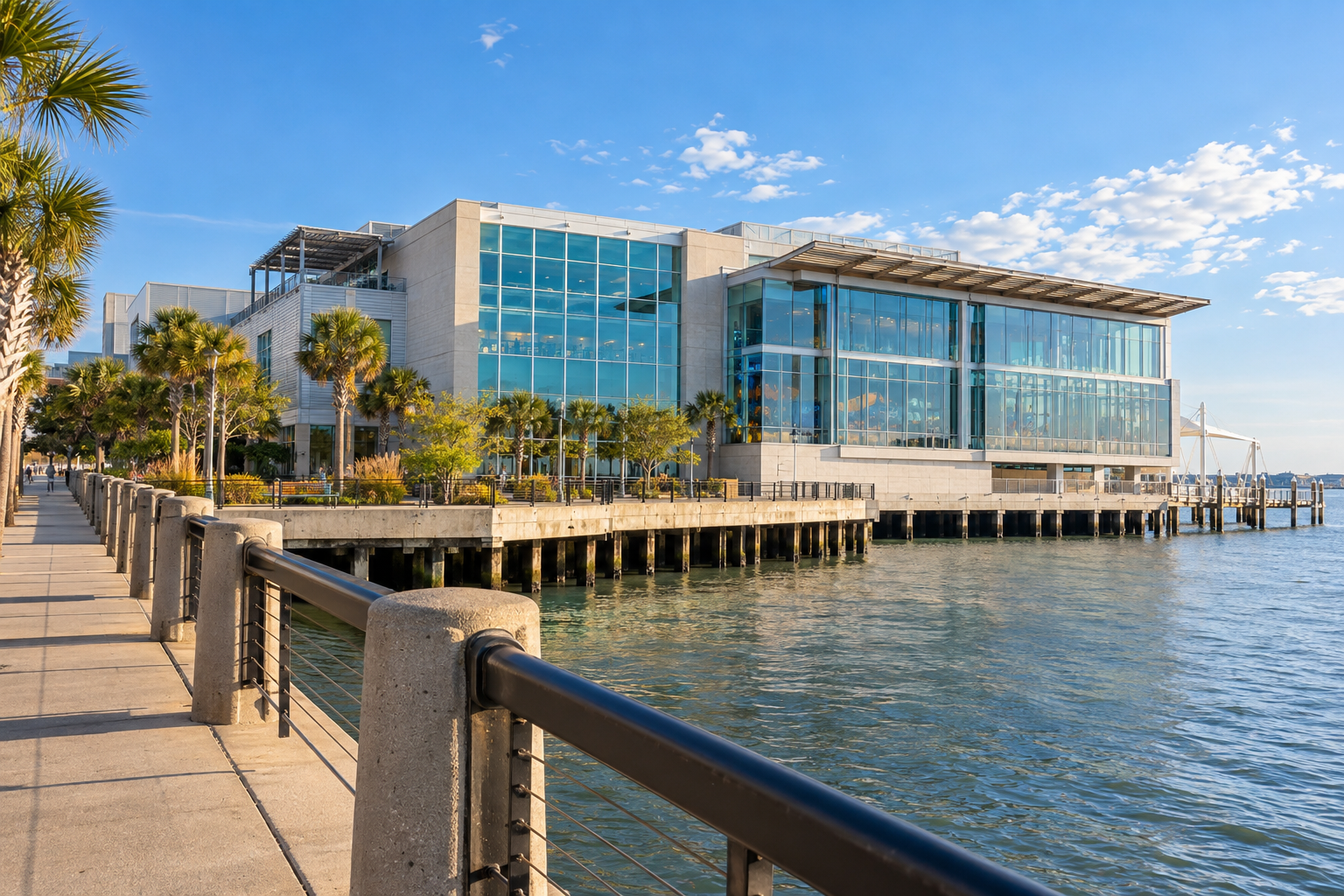
Located on Charleston's waterfront, this 70,000-square-foot aquarium features interactive exhibits of native South Carolina marine life, from loggerhead sea turtles to river otters and Atlantic sharks. The building itself is architecturally striking with floor-to-ceiling windows overlooking the harbor in downtown Charleston, and exhibits are organized geographically by ecosystem. The Conservancy Splash Park outside offers water play for younger children.
Fun fact: The aquarium's 385,000-gallon Great Ocean Tank holds 70 sharks and large fish, and visitors can watch feeding demonstrations daily.
Tip: Admission is $26 adult; purchase tickets online for a small discount and to skip box office lines. Plan 2-3 hours; the air-conditioned interior is a relief during hot, humid summer days.
From the marshlands of the Low Country to the mountain foothills, South Carolina's diverse landscapes and rich heritage offer something memorable for every traveler. Plan your first visit around these 12 destinations and you'll understand why so many visitors return again and again.
Frequently asked questions
What is the best time to visit South Carolina for a first trip?
Spring (March-May) and fall (September-November) offer pleasant weather and fewer crowds than summer. Spring brings peak azalea blooms at Magnolia Plantation, while fall features autumn foliage at Pinnacle Mountain. Summer is hot and humid but draws families to beaches; winter is mild but some attractions have reduced hours.
How many days do I need to see these 12 South Carolina destinations?
A comprehensive first visit covering all 12 stops requires 7-10 days. A 5-day trip could focus on Charleston attractions (Historic District, Fort Sumter, Magnolia Plantation, Aquarium) plus Folly Beach. For a 10-day itinerary, add Myrtle Beach, Beaufort, Hunting Island, Cypress Gardens, Congaree, and Pinnacle Mountain.
Which South Carolina destinations are best for families with children?
Myrtle Beach Boardwalk offers the SkyWheel and arcade games; South Carolina Aquarium has interactive tanks and a splash park; Hunting Island State Park provides beach swimming and lighthouse climbing; Folly Beach Pier allows fishing and has nearby restaurants; Cypress Gardens offers kayaking or tram tours through scenic swamps.