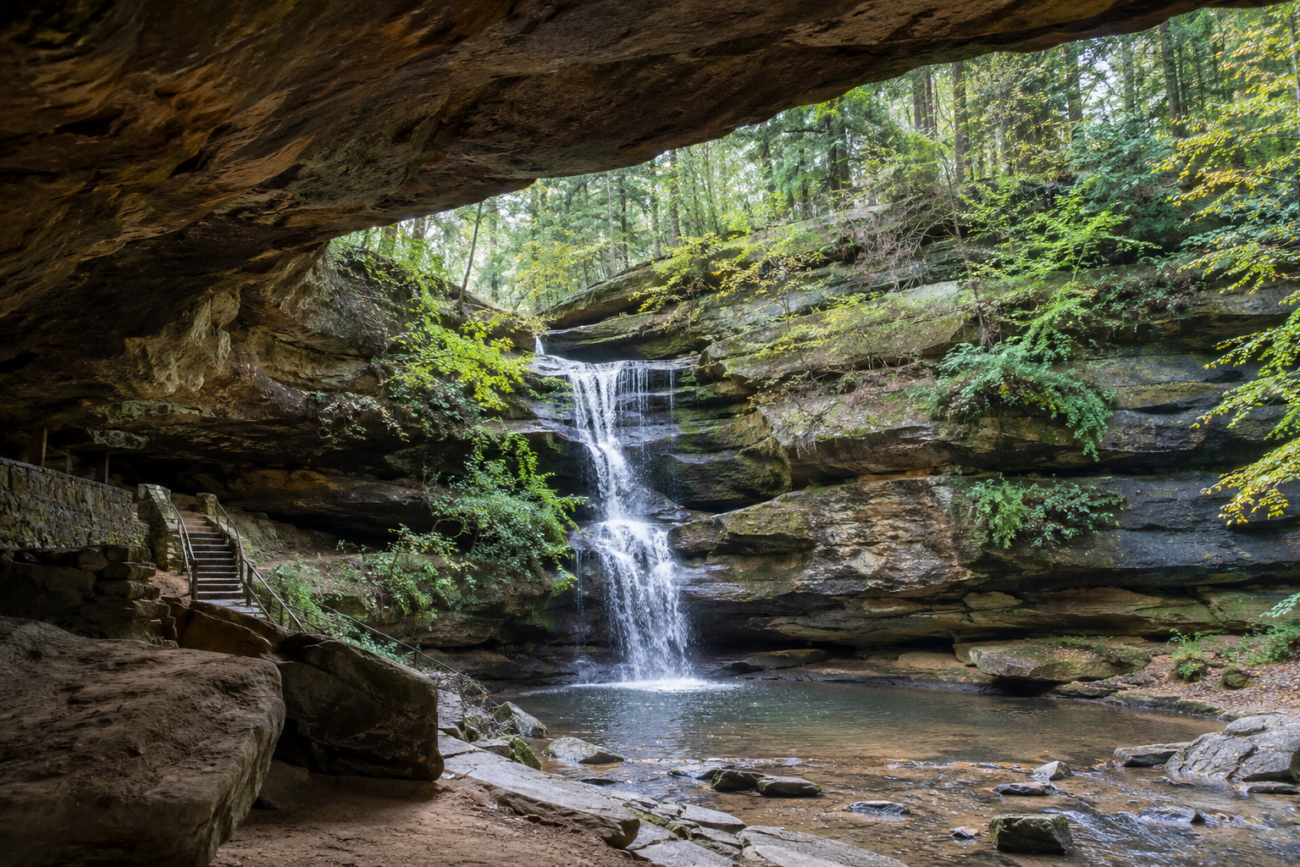
Ohio's landscape offers abundant photogenic destinations that rival more famous tourist regions across the country. From dramatic waterfalls in Hocking Hills to vibrant street art in Cincinnati and historic covered bridges in Ashtabula County, these visual landmarks deliver compelling photography opportunities for both casual smartphone users and experienced photographers. Whether you're planning a weekend trip, scenic drive, or multi-day road trip, these hidden gems showcase why Ohio deserves a spot on any photographer's travel itinerary.
1. Hocking Hills State Park
Logan, Ohio
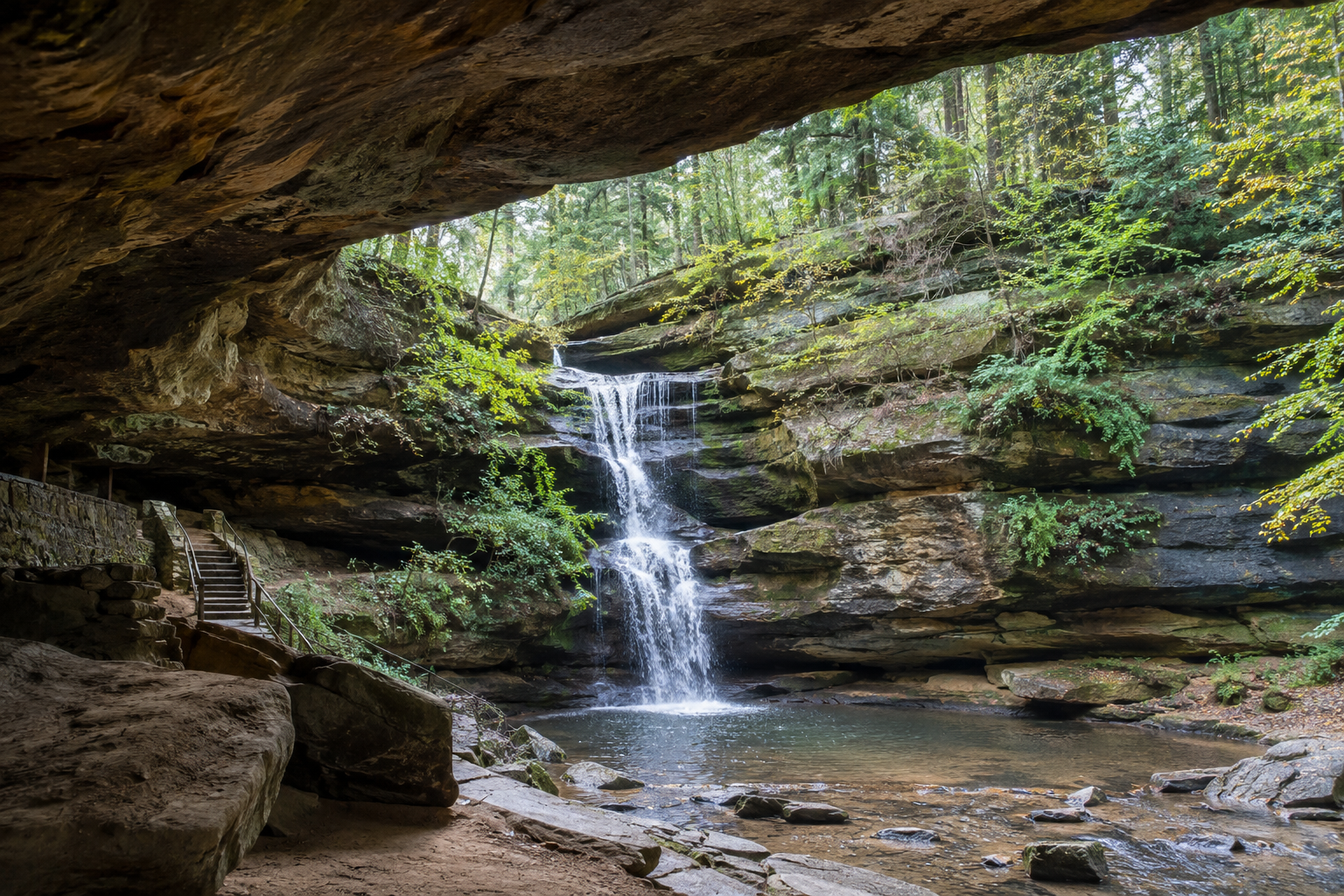
This southeastern Ohio state park showcases dramatic gorges, waterfalls, and cliff formations that make even casual smartphone photos look professional. Old Man's Cave, Ash Cave, and Cantwell Cliffs offer distinct vantage points where layered rock faces and cascading water create natural drama. The park near Logan features some of Ohio's most scenic hiking trails and accessible waterfall viewing areas.
Fun fact: The park's most iconic waterfall, Old Man's Cave's lower falls, stays frozen in winter, creating an otherworldly ice sculpture that attracts photographers year-round.
Tip: Visit in autumn for the richest foliage or spring for flowing waterfalls; parking fills quickly on weekends, so arrive by 9 a.m. Hiking is free but can be muddy—wear appropriate footwear.
2. Cincinnati's Graffiti Alley
Cincinnati, Ohio
A two-block stretch in the historic Over-the-Rhine neighborhood bursts with large-scale murals and street art that shifts seasonally as new artists contribute. The Cincinnati alley has transformed from industrial grit into an open-air gallery that draws photographers, art enthusiasts, and curious travelers. This colorful street art scene represents one of the best places to photograph contemporary murals in Ohio.
Fun fact: The Over-the-Rhine neighborhood's transformation from decline to creative hub happened largely through grassroots artist initiatives starting in the early 2000s, making it one of the Midwest's most authentic street art scenes.
Tip: Free to explore and photograph; visit weekday mornings for fewer crowds and better light angles. The alley runs along Vine Street between 13th and 14th in Cincinnati—street parking available but limited.
3. Kelleys Island Limestone Quarry
Kelleys Island, Ohio
Located on Lake Erie near Marblehead, this former quarry transformed into a striking geological feature with quarried limestone walls rising dramatically above water level. The bright white and gray stone faces create striking contrasts, especially at sunrise or sunset when light hits the cliffs from the side. The quarry offers some of Ohio's most unique landscape photography opportunities on the state's northern coast.
Fun fact: The quarry was actively mined for limestone used in construction and cement production from the 1800s through mid-1900s, leaving behind this accidental landscape masterpiece.
Tip: Accessible by ferry from Marblehead ($15 round-trip per vehicle); the quarry itself is free to photograph from the shore. Best light is early morning or late afternoon; bring insect repellent for summer visits.
4. Cuyahoga Valley National Park's Brandywine Falls
Peninsula, Ohio
Ohio's tallest waterfall at 65 feet, Brandywine Falls near Peninsula is framed by hemlock and beech forest that creates a natural amphitheater effect. The observation deck and surrounding trails offer multiple angles for waterfall photography, from intimate forest perspectives to the dramatic full-cascade view. This free waterfall destination is one of Ohio's most accessible scenic hiking locations.
Fun fact: The falls drop into the Cuyahoga River, which famously caught fire in 1969—an event that sparked the modern environmental movement and eventually led to the river's cleanup and this area's transformation.
Tip: The observation deck is free and accessible year-round via a 125-step boardwalk. Weekday mornings offer better photography light and fewer visitors; parking fills on summer weekends by mid-morning.
5. The Toledo Mud Hens Stadium District
Toledo, Ohio
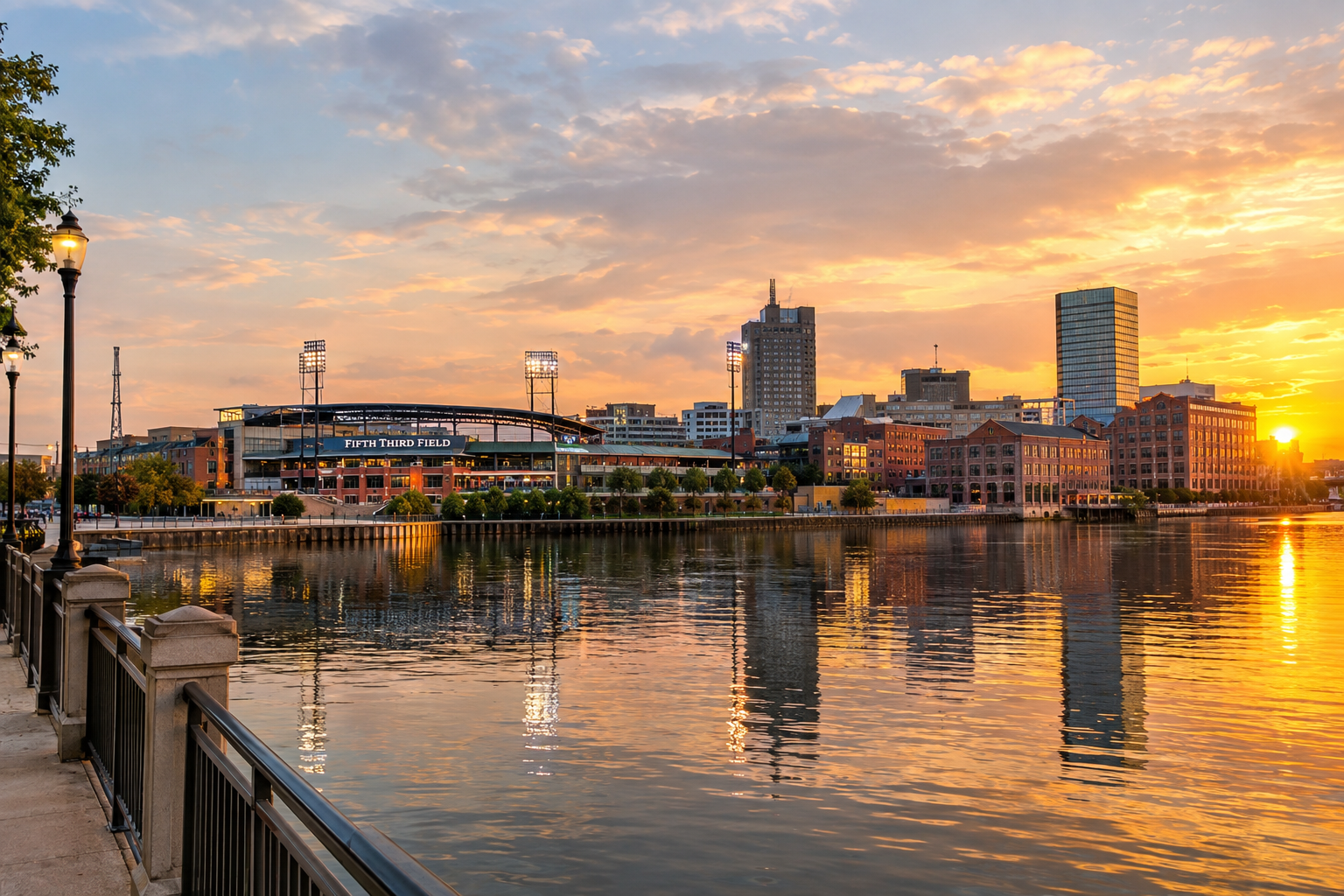
While the ballpark itself is striking modern architecture, the surrounding warehouse district in Toledo along the Maumee River has become a hotspot for urban photography with restored brick buildings, river reflections, and the nearby Imagination Station building. The neighborhood blends baseball nostalgia with contemporary revitalization and offers excellent visual landmarks for architectural photography.
Fun fact: The team's mascot and name come from a real bird—the American coot, a dabbling duck historically found in local wetlands, which workers nicknamed 'mud hens.'
Tip: Free to photograph the exteriors and neighborhood; game tickets available seasonally. Street parking available; visit evenings for the best light on the riverfront and building facades.
6. Ashtabula Harbor Covered Bridges
Ashtabula, Ohio
Ohio's largest concentration of covered bridges clusters in Ashtabula County, with 19 of the state's 144 surviving examples within easy driving distance of the harbor area. Each bridge combines weathered wood texture with rural stream settings, creating pastoral scenes that feel removed from modern Ohio. This region offers some of the best historic covered bridge photography in the Midwest.
Fun fact: These historic wooden bridges, many dating to the 1800s, were designed to protect timber from weather—a covered bridge's roof can extend a structure's lifespan from 20 to over 100 years.
Tip: Free to photograph; many are accessible by short farm roads off State Route 20. Fall is optimal for foliage and light; the Ashtabula Convention Center provides a free map of all bridge locations.
7. Cleveland's West Side Market
Cleveland, Ohio
Built in 1912, this working farmers market in downtown Cleveland is a sensory explosion of vendors, hanging produce, vibrant signs, and architectural details. The interior's exposed steel trusses, skylights, and perpetual activity create dynamic photography opportunities beyond typical food markets. West Side Market represents one of Cleveland's best places for colorful, energetic interior photography.
Fun fact: The market's design reflected the 'city beautiful' movement of the early 1900s, treating a public market as important civic architecture rather than purely functional infrastructure.
Tip: Open year-round; best photographed mid-morning when light streams through skylights and vendor stalls are fully active. Street parking available on Clark Avenue; small entry fee ($3) applies for some days.
8. Serpent Mound
Peebles, Ohio
This 1,348-foot-long earthwork near Peebles, built by ancient peoples, undulates across an Adams County hilltop with no confirmed explanation for its purpose. Best viewed from above, it creates an iconic serpent shape that's immediately recognizable from photographs, especially during golden hour when shadows emphasize the mound's curves. Serpent Mound is one of Ohio's most mysterious and photogenic archaeological sites.
Fun fact: The mound's age remains debated—it could be 2,000 years old or older, constructed by the Fort Ancient culture or possibly the Adena people, making it one of Ohio's deepest historical mysteries.
Tip: Free to visit; the observation tower provides the clearest viewing angle for photography. Visit during late afternoon for the most dramatic shadow definition; parking is available at the adjacent visitor area.
9. Starved Rock Area and Scenic Byway
Starved Rock, Ohio
Along Ohio's scenic byway through Adams and Pike Counties, Starved Rock offers sandstone cliffs rising above the Ohio River with hiking trails leading to overlooks and hidden waterfalls. The river valley near Starved Rock features geological layers and autumn colors that create dramatic depth in photographs, making it ideal for scenic drive photography.
Fun fact: The rock outcrop's name comes from a 1700s legend of Indigenous warriors supposedly trapped and starved on the bluff—a tale that likely blends history with folklore but remains part of the region's narrative.
Tip: Free to explore trails; the best light for river views is mid-morning from most overlooks. No water or facilities at the trailheads; the scenic byway drive itself is worth photographing from pullouts.
10. Playhouse Square District
Cleveland, Ohio
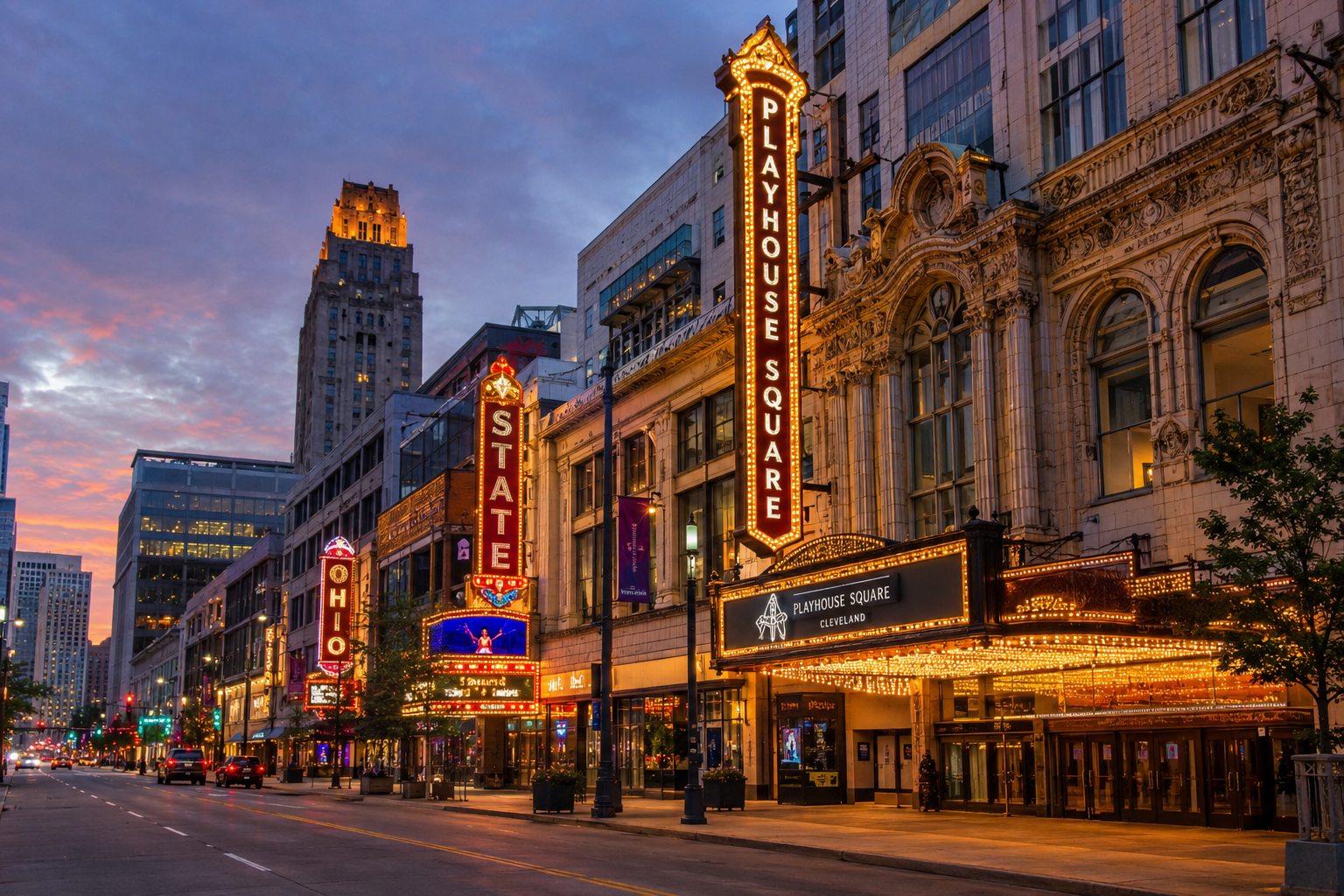
This historic downtown theater district in Cleveland preserves a cluster of 1920s-era palace theaters with ornate facades, marquees, and architectural detail that evokes the glamor of cinema's golden age. The surrounding streetscape offers both architectural photography and the visual theater of nightlife crowds, making it one of Cleveland's best places for evening urban photography.
Fun fact: Playhouse Square is the second-largest theater district in the United States by number of theaters (nine), second only to Broadway's theater district in New York City.
Tip: Free to photograph exteriors; evening shots capture lit marquees and neon signage. Street parking available; visit during performance season (fall through spring) for the most atmospheric lighting and crowds.
Ohio has far more visual character than most travelers realize. These 10 destinations span the state's diverse geography—from Lake Erie's limestone quarries to the Ohio River valley's sandstone cliffs—and work well as standalone day trips or as part of a longer road trip itinerary. Start planning your route to these standout locations and discover why photographers and visual explorers keep returning to Ohio.
Frequently asked questions
What's the best time of year to photograph photogenic destinations across Ohio?
Autumn (September-October) offers rich foliage and ideal photography light, while spring (April-May) brings waterfalls and new growth. Winter can work for dramatic landscapes and frozen falls, though weather adds travel challenges. Summer is fully accessible but crowds are heavier at popular spots like Hocking Hills and Cuyahoga Valley.
Are these photogenic Ohio locations free to visit and photograph?
Most are free to access and photograph from public areas. State parks like Hocking Hills and Serpent Mound have free admission; Brandywine Falls is free within Cuyahoga Valley National Park. Urban areas like Graffiti Alley and Playhouse Square are free to photograph. West Side Market in Cleveland may have nominal entry fees on certain days.
How can I plan a road trip visiting multiple photogenic spots across Ohio?
These destinations spread across Ohio's regions—plan separate trips for a southeast cluster (Hocking Hills near Logan, Serpent Mound near Peebles, Starved Rock), a northeast cluster (Ashtabula covered bridges, Kelleys Island), and a northern cluster (Toledo, Cleveland). Cleveland makes a good hub connecting Playhouse Square, West Side Market, and Cuyahoga Valley within an hour's drive.